Your credit card almost certainly isn’t broken when a Japanese booking site rejects it. The real cause is usually a missing 3D Secure setup, not your bank balance. I’ve watched travelers stare at the same error message at Shin-Osaka’s ticket machines more times than I can count. If your credit card declined in Japan today, here’s what actually fixes it. Five options, ranked by how fast each one gets you back on a train.
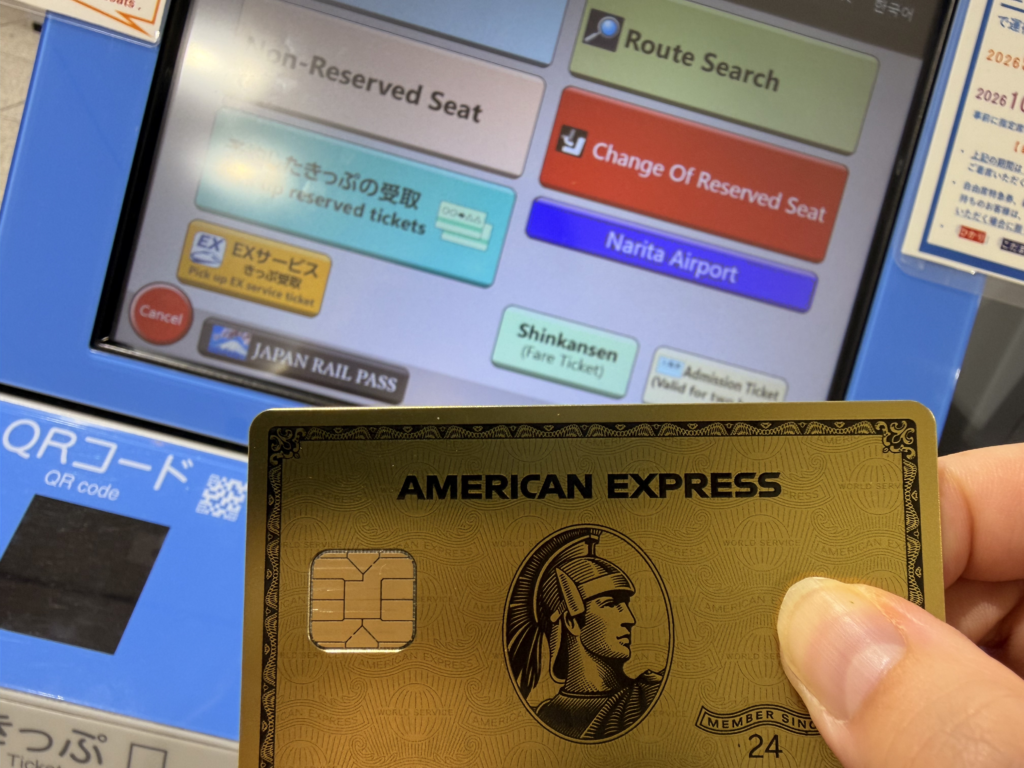
Why Your Credit Card Declined in Japan in the First Place
Three things cause most failures. Japanese booking sites require 3D Secure 2.0, a verification layer many foreign banks haven’t set up for their cards. Fraud-detection systems sometimes block the charge before that screen even loads, flagging a Japanese transit website as high-risk. SMS-based one-time codes often don’t reach travelers already overseas, especially without a working home SIM.
None of the three official JR platforms publish a list of which foreign banks work reliably. The same Visa card from the same bank can succeed for one traveler and fail for the next. That pattern is usually why your credit card declined in Japan, and it’s rarely about your account itself.
Before You Leave Home: 3 Ways to Avoid the Problem Entirely
You can dodge most of this before you even land in Japan.
Call your card issuer first. Tell them the exact travel dates and that a Japanese rail company will charge the card. Many banks can pre-clear the transaction on the spot.
Enroll in 3D Secure now. Log into your card’s app and turn on Visa Secure, Mastercard ID Check, or Amex SafeKey before your trip, not during it.
Pack two card networks. A Visa that fails and a JCB or Amex that works can save an entire afternoon at Shin-Osaka Station.
At a Glance: 5 Ways to Pay When Your Card Won’t Go Through
| Option | Fees | Foreign Card Success Rate | Best For |
|---|---|---|---|
| SmartEX | No sign-up fee, small change fee | High. Accepts Visa, Mastercard, JCB, Amex, Diners, and Discover. | Tokaido, Sanyo, and Kyushu Shinkansen bookings |
| JR-EAST Train Reservation | No sign-up fee | Moderate. 3D Secure issues are common on North American cards. | Tohoku, Hokkaido, and Hokuriku Shinkansen |
| JR-WEST Online Train Reservation | No sign-up fee | Moderate. Same 3D Secure requirement as JR-EAST. | Regional passes and western Japan routes |
| Klook | Booking fee built into the price | Very high. Accepts PayPal and cards that skip 3D Secure. | A guaranteed fallback booking |
| Station ticket counter or machine | None beyond the ticket price | Highest. In-person transactions skip 3D Secure entirely. | Same-day fixes after an online decline |
A quick pattern worth knowing: every official JR booking site runs on the same 3D Secure 2.0 standard. If one rejects your card, the other two probably will too. Plan around that instead of retrying the same card five times.
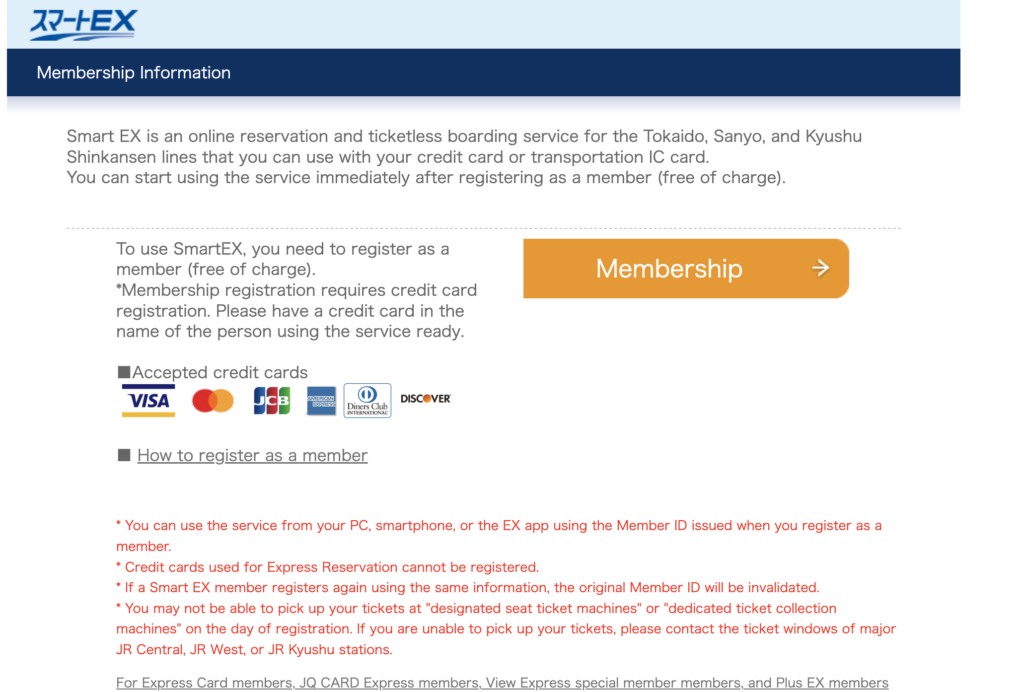
SmartEX
Cost: Free to register, a small fee applies for changes
Pros
- The widest card list of the three official platforms: Visa, Mastercard, JCB, Amex, Diners, and Discover.
- Links to your Suica or PASMO, so you tap straight through the gate without printing anything. That single feature alone saves a trip to the ticket machine at every station along the way.
- Covers the busiest tourist corridor: Tokyo to Kyoto, Osaka, Hiroshima, and Hakata, the route most first-time visitors actually ride.
Cons
- Requires 3D Secure enrollment before it accepts any card at all.
- Doesn’t cover Tohoku, Hokkaido, or Hokuriku lines.
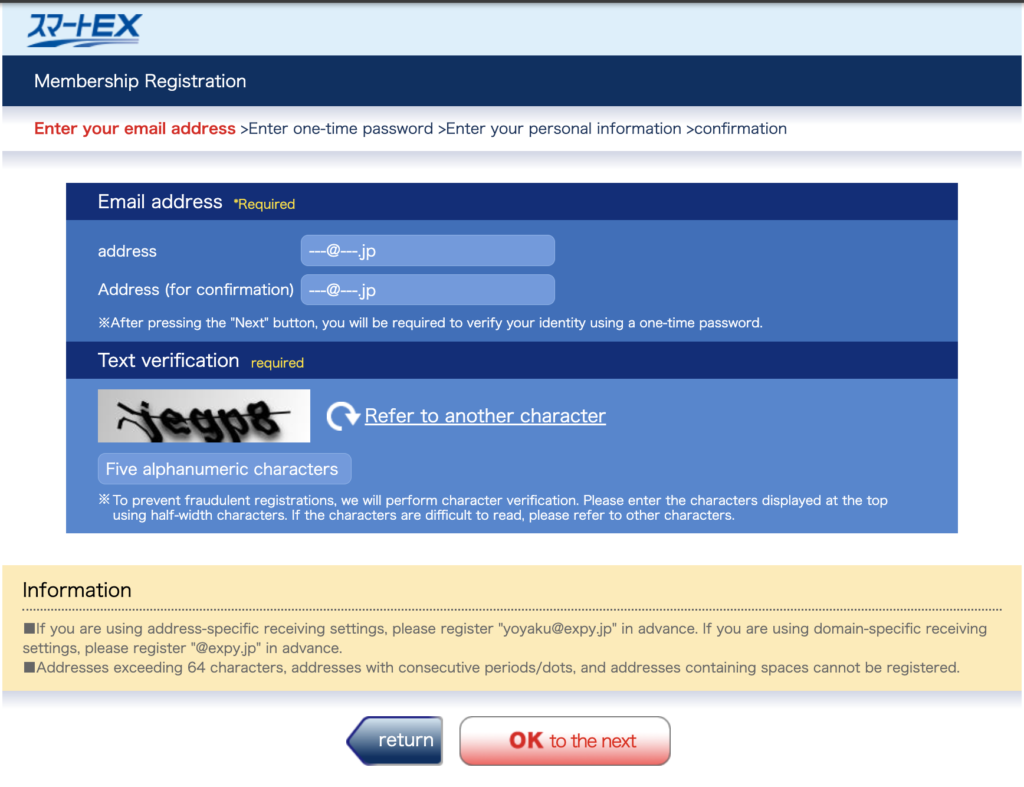
- Registration can loop you back to a vague error screen with no clear explanation, often without naming which step actually failed.
- English covers the top page, membership registration, and login. Some screens further into the booking flow can still drop back into Japanese.
I registered a Japan-issued card on SmartEX in about two minutes flat. A friend visiting from Chicago spent 20 minutes stuck on the same screen. Her bank hadn’t enrolled her Visa in Visa Secure yet.
If a screen suddenly loads in Japanese mid-booking, don’t back out and start over. Open your browser’s menu and turn on its built-in translation instead, Google Translate in Chrome, or the built-in translator in Safari. Keep going in the same tab. It reads a little rough, but every field stays clickable.
JR-EAST Train Reservation
Cost: Free to register
Pros
Handles Tohoku, Hokkaido, Joetsu, Hokuriku, Yamagata, and Akita Shinkansen bookings in English.
The Shinkansen e-ticket links your IC card as a boarding pass, the same way SmartEX does.
Useful for JR EAST PASS holders reserving seats without paying extra, since the reservation itself never touches your card.
Cons
Foreign Visa and Mastercard cards fail here more often than on SmartEX.
SMS-based verification frequently doesn’t reach travelers who are already in Japan.
No Discover card support, which narrows your backup options.
JR-WEST Online Train Reservation
Cost: Free to register
Pros
The platform to use for Kansai-based regional passes, including the Kansai Wide Area Pass.
Interfaces in English, Traditional Chinese, Simplified Chinese, and Korean.
Covers the western Hokuriku Shinkansen section into Kanazawa and Tsuruga, useful if your trip stretches beyond the usual Kansai loop.
Cons
Mostly paper-based. You’ll collect a physical ticket at a station machine instead of tapping through.
Same 3D Secure requirement as the other two official platforms.
No IC-card boarding for most routes.
If you’re heading into Kansai on a regional pass and your card fails here, don’t panic. Walk to any Midori-no-Kenbaiki machine at Shin-Osaka or Kyoto Station and pay in person instead.
Klook
Cost: A booking fee folded into the listed price
Pros
Accepts PayPal and cards that fail 3D Secure on the official JR sites.
Bundles passes with extras, like a same-day eSIM.
Confirmation usually arrives within minutes, even from overseas.
Cons
Prices run slightly higher than booking direct through JR.
Customer support response times vary if something goes wrong with a booking.
Not every regional pass or Shinkansen route is listed, so double-check availability before you count on it as your only backup.
I’ve bought a Kansai Wide Area Pass through Klook myself. A friend’s card kept failing on the JR-WEST site the night before her trip, and the instant voucher delivery saved the day.
Station Ticket Counter or Machine
Cost: Standard ticket price, no extra fee
Pros
In-person transactions skip 3D Secure entirely, so cards that failed online often succeed here.
Midori-no-Madoguchi staff at major stations, including Tokyo, Shin-Osaka, and Kyoto, usually speak enough English to help.
Multilingual ticket machines exist at nearly every major Shinkansen station, with English, Chinese, and Korean menu options built in.
Cons
You need to already be in Japan, which doesn’t help with pre-trip planning.
Peak-season trains can sell out before you reach the counter.
Lines at Midori-no-Madoguchi windows can run 15 to 20 minutes during holiday weeks.
Which One Should You Buy?
Match the fix to your route and how much time you have left before departure.
Traveling the Tokyo-Kyoto-Osaka-Hiroshima corridor and your card won’t register? Try SmartEX first, then fall back to Klook if 3D Secure keeps blocking you.
Heading into Tohoku or Hokkaido? JR-EAST Train Reservation is your only official option, so keep a backup card ready before you start.
Carrying a Kansai Wide Area Pass or another regional pass? Book it through JR-WEST Online Train Reservation, or skip the online step and buy at a station counter once you land.
Already in Japan, staring at a dead-end error screen? Walk to the nearest Midori-no-Madoguchi counter. It solves the problem faster than any app will.
Whatever the reason your credit card declined in Japan, one of these five options gets you back on a train within the hour. Keep a backup card on a different network, Amex alongside Visa or JCB, before you leave home. None of these fixes cost you extra time once you know which one matches your situation.
FAQ
Why does my credit card get declined in Japan on train booking sites?
Almost always 3D Secure. Japanese booking sites require this extra verification step. Many foreign-issued cards aren’t enrolled, or can’t receive the authentication code while you’re abroad.
Does American Express work better than Visa in Japan?
Travelers report more success with Amex, since it runs its own SafeKey authentication. Results still vary by bank, so keep a second card as backup.
Can I just buy Shinkansen tickets in person instead of online?
Yes, and it usually works even when your card failed online first. Station ticket machines and counters process cards in person, bypassing 3D Secure entirely. It’s the most reliable fallback when online booking keeps failing, and non-peak trains rarely sell out before you reach the counter.