You Have 45 Minutes and 2,000 Pens to Choose From
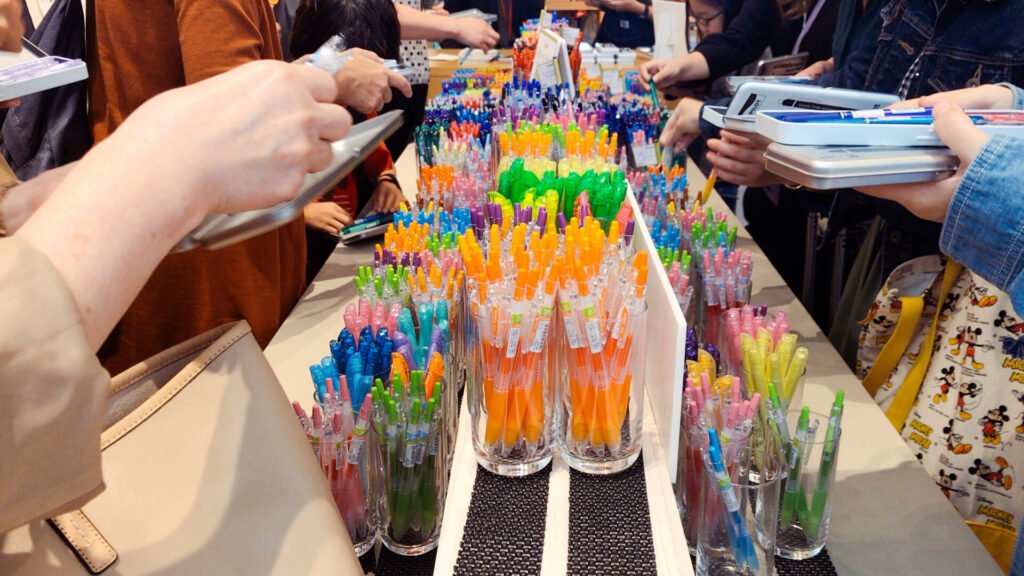
Itoya Ginza fountain pens fill an entire floor, close to 2,000 models deep. You have one afternoon in your Tokyo stationery itinerary and a flight home in four days. Here’s the short answer: if you want one pen that writes well, fits a carry-on, and won’t feel wasted if it gets lost, get the Platinum 3776 Century. If your budget caps at $20, the Pilot Kakuno beats every pen twice its price. Itoya’s official store guide confirms the third floor, called “DESK,” is dedicated entirely to pens and paper, so that’s where to head first.
This isn’t a ranked list of the “best” pens in Japan. It’s a comparison built for one specific person: a first-time visitor standing in Itoya Ginza, or shopping the same models online after getting home. Four pens. Four very different jobs. Read the table, then jump to the section that matches how you actually write.
Itoya Ginza Fountain Pens at a Glance
| Pen | Price | Nib Material | Weight | Best For |
|---|---|---|---|---|
| Platinum Preppy | $4 | Stainless steel | 12.8g | First-timers testing fountain pens |
| Pilot Kakuno | $15 | Stainless steel | 11.3g | Students and daily journal writers |
| Sailor Pro Gear Slim | $168 | 14k gold | 17g | Frequent travelers who want gold in a small body |
| Platinum 3776 Century | $180 | 14k gold | 20.4g | Gift-giving and long writing sessions |
Four price tiers. Four different nib feels. Notice the weight spread runs from 11.3g to 20.4g, less than a AA battery, but the difference shows up fast once you’re writing for twenty minutes straight.
Platinum Preppy: The $4 Pen That Converts Skeptics
What it feels like to write with
You post the cap, click it into place, and the nib touches paper before you’ve finished the thought. The line comes out thin, a touch scratchy at first, then smooth after a page or two of ink flow. This is the pen bloggers hand to a friend who says “I don’t do fountain pens.” Ten minutes later, that friend is asking where to buy three more.
Pros
The price removes all risk. At $4, you can buy five colors and still spend less than a single Sailor nib unit. The clear poly-carbonate barrel shows exactly how much ink is left, useful for a first-time user who’s never tracked ink level before. Platinum’s Slip & Seal cap keeps the nib from drying out for months, so it survives being left in a drawer between trips to Japan.
Cons
The stainless steel nib is stiff. Press hard and you get no line variation, just a flat, uniform stroke. The plastic body feels exactly like what it is: a $4 pen. If you’re buying a gift for someone who already owns three fountain pens, this will read as an afterthought.
Pilot Kakuno: The Pen for People Who Write Every Day
What it feels like to write with
The hexagonal grip stops your fingers from sliding, which matters after page four of a bullet journal spread. Look down at the nib and there’s a tiny smiley face stamped into the steel, oriented so you know the nib is facing up before you write a single word. It’s a small detail, but it’s the kind of detail that makes a $15 pen feel considered rather than cheap.
Pros
At 11.3g, it’s the lightest pen on this list, which matters if you’re journaling for thirty minutes at a coffee shop in Yanaka and don’t want hand fatigue. The steel nib in Medium width lays down a wetter, smoother line than the Preppy at nearly four times the price. Pilot’s CON-40 converter (sold separately, around $6) lets you switch from cartridges to bottled ink once you’re hooked.
Cons
Ink cartridges are Pilot’s proprietary size, so you can’t grab a standard international cartridge if you run out mid-trip. The plastic resin body, even at 85% recycled content, still photographs like a student pen rather than something you’d hand over as a souvenir.
Sailor Pro Gear Slim: The Gold Nib That Fits in a Jacket Pocket
What it feels like to write with
Uncap it and the 14k gold nib gives just slightly under pressure, the way a good pen should. Sailor’s nibs run narrow, so a Medium here writes closer to a Western Fine. At 109.7mm capped and 17g, it slides into a shirt pocket without the weight announcing itself. This is the pen you post home receipts with while standing at the JR East ticket counter figuring out your next transfer.
Pros
Gold nibs flex slightly with pressure, giving your handwriting a bit of thick-thin variation the steel nibs above can’t produce. The compact size, built for smaller hands originally, works well as a daily carry rather than a desk-only pen. Sailor sells the Pro Gear Slim in dozens of colorways, including seasonal releases only sold at flagship stores like Itoya.
Cons
At $168 for the standard line, this is a 40x price jump from the Kakuno for a nib upgrade, not a size upgrade. Cartridges are proprietary again. If you want to fill from a bottle, you’ll need Sailor’s converter, sold separately for about $10. Smaller hands love the slim body. If you have larger hands, four hours of writing will start to cramp your grip.
Platinum 3776 Century: The One You Buy for Someone Who Already Has Everything
What it feels like to write with
Named for Mt. Fuji’s height in meters, the 3776 has a heft the other three don’t: 20.4g, enough that you feel the pen working rather than just guiding it. The 14k gold nib in Fine writes closer to a Western Extra-Fine, precise enough for annotating a paperback on the Shinkansen without the ink bleeding through thin pages. Platinum’s Slip & Seal cap means you can leave it uncapped on your desk for a day and it still starts on the first stroke two weeks later.
Pros
The nib selection runs from Ultra Extra Fine to Coarse, wider than any pen above, so you can match your actual handwriting instead of settling. Platinum rates the cap seal at up to 24 months without drying, the longest claim in this lineup. At $180, it undercuts two close rivals: the Pilot Custom 74 and Sailor 1911. Both typically cost $20 to $40 more.
Cons
At 20.4g, this is nearly double the Kakuno’s weight. You’ll notice it if you’re taking notes standing up at a museum rather than seated at a desk. The resin body comes in striking colors like Bourgogne and Chartres Blue. But the plainer black and clear versions look almost identical to pens costing a third as much. So the price tag is doing work the appearance doesn’t.
Which One Should You Buy?
Whichever of these Itoya Ginza fountain pens you choose, match it to how you actually write, not to the name on the box.
If this is your first fountain pen, buy the Platinum Preppy. Four dollars is low enough that a scratchy first week won’t sour you on the whole hobby, and you’ll know within a week whether fountain pens are for you.
If you journal daily or you’re a student stocking up for the semester, buy the Pilot Kakuno. It’s the best writing experience under $20 in this entire comparison, and the smiley-face nib alignment trick alone saves you from smudged pages.
If you travel often and want a gold nib without the desk-pen bulk, buy the Sailor Pro Gear Slim. At 17g and 109.7mm capped, it disappears into a bag pocket, and the seasonal colorways give you something you genuinely can’t buy outside Japan.
If you’re buying a gift, buy the Platinum 3776 Century. It also suits long writing stretches, with the smoothest line on this list. The Mt. Fuji naming story alone makes it a better souvenir than anything wrapped in a gift shop bag. The 24-month cap seal adds a practical edge: it survives sitting unused between trips.
FAQ
Are Itoya Ginza fountain pens good for beginners?
Yes. Japanese nibs run narrower than Western nibs of the same label, so a Japanese Medium often writes like a Western Fine. Start with a steel nib pen like the Kakuno or Preppy before spending on gold; steel nibs cost less to replace if your grip pressure is still inconsistent.
Can you use international ink cartridges in a Pilot or Platinum pen bought in Japan?
Not directly. Pilot and Platinum both use proprietary cartridge shapes, incompatible with standard international short or long cartridges. Buy the brand’s own converter, usually $6 to $10, and you can fill from any bottled ink instead.
Is it cheaper to buy fountain pens in Japan than online in the US?
Sometimes, but not by much on standard models. A Platinum 3776 Century costs close to $180 in Japan and through a US retailer alike. The real savings show up on limited colorways and seasonal editions sold only in Japanese stores. These often resell online for double once they’re gone.